Real ownership of a real harvest.
The farm, in fractions.
For those who
think in harvests.
OpenHarvest is an investment platform built on farms that already grow, process and sell real products. A farm like this once had room for one owner. Now it has room for many.
Approach
A farm is built in layers.
So is the way you own one.
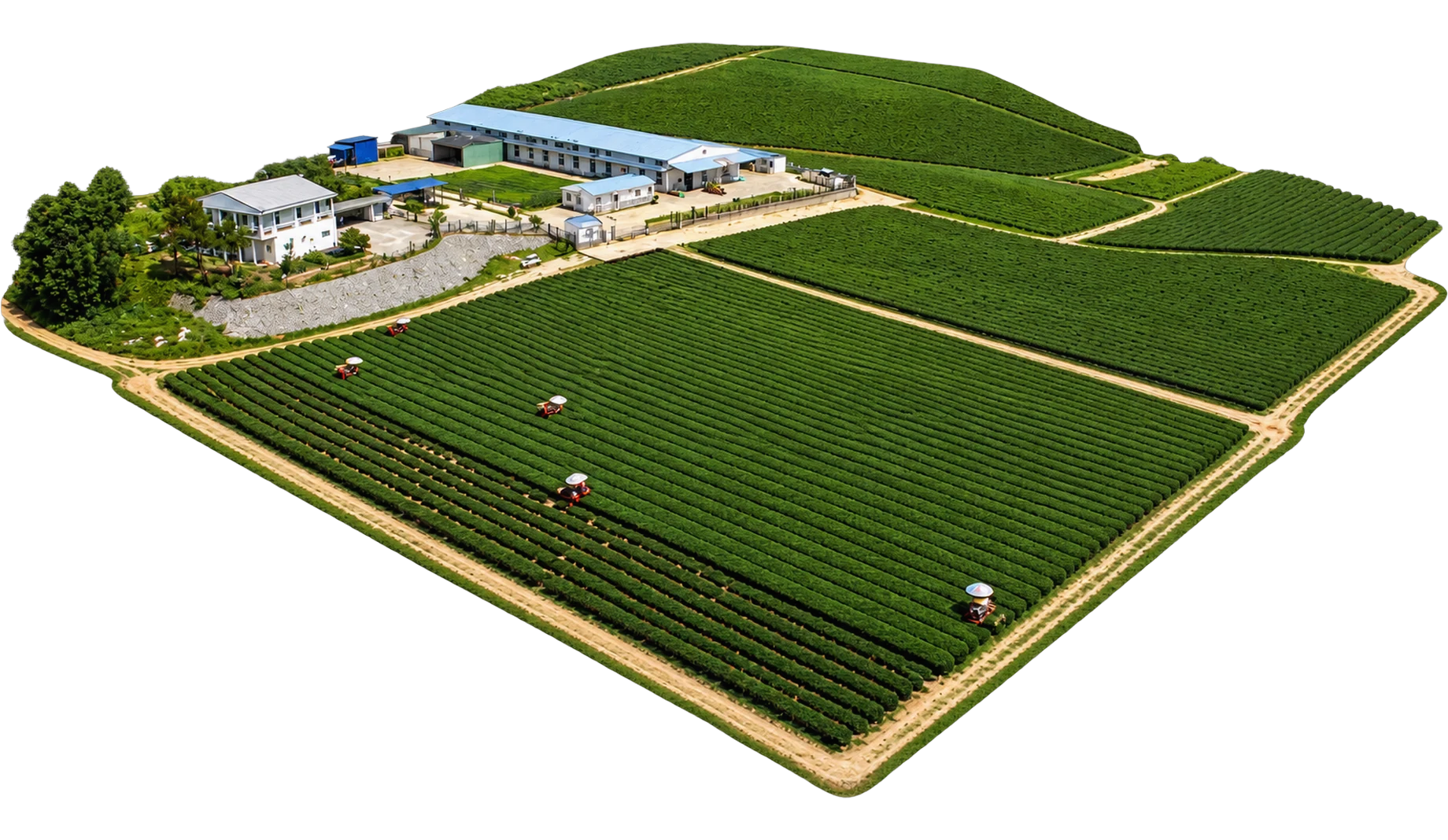
The Asset
A farm is a working business long before it becomes an investment, with land, plants, a processing line and customers on the other end. We only structure farms that are already growing and already selling.
- Location
- 20.80° N, 104.77° E
- Area
- 51 hectares
- Products
- Matcha, Sencha, Houjicha
- Status
- Operating
The Ownership
What you hold is not the land itself but a defined claim on what the farm produces. The rights that claim carries, to income, to information and to a vote, are set out in the offering documents before anyone invests.
- Type
- Fractional security
- Rights
- Income, information, voting
- Transfer
- Subject to eligibility
- Defined by
- Offering documents
The Harvest
Income here is not issued, it is grown. Each harvest is picked, processed and sold, and once the costs of growing it are paid, what remains is distributed among the shares outstanding. What is retained can fund the next farm, with holders voting on each acquisition.
- Funded by
- Farm operations
- Sequence
- Costs, reserves, then investors
- Reported
- Volume, revenue, distributions
- New farms
- By holder vote
Process
How a working farm becomes something
you can hold a share of.
ISource
Farms already growing, processing and selling, with records going back years. Not land to be developed later.
IIVerify
Production, costs, contracts, land rights and an independent valuation are checked first. No farm is offered until they are.
IIIStructure
Each farm gets its own vehicle. The SPV holds the interest in the farm and issues the security against it.
IVIssue
The security is tokenized and divided, so people can hold a piece instead of the whole.
VDistribute
The farm keeps operating. Each harvest is sold, costs are paid, and what remains reaches holders.
VIAcquire
Retained cash funds the next farm. Holders vote on which one. The loop starts again.
Most farmland never reaches investors.
Farmland is a ten trillion dollar asset class, and buying in means buying a whole farm, rarely under a million dollars. Investors want income backed by something real, and good farms want capital without selling themselves. Nothing has connected the two.
The value of farmland worldwide. Larger than most asset classes an investor can freely buy into.
Institutional money invested in farmland worldwide. Around half a percent of the asset class.
Real-world assets now represented on chain, up from $4.1B in January 2025. The mechanism works. Farmland has barely used it.
Figures from third-party research on farmland and tokenized asset markets, current to 2026. Not projections, and not a forecast of any OpenHarvest offering.
A portfolio that grows the way farms do, one harvest funding the next.
Portfolio
A portfolio that grows the way farms do, one harvest funding the next.
Flywheel
Evidence compounds. Every farm the platform proves makes the next one easier to underwrite, fund and report.
01Prove
The first farm is tokenized and builds a verified reporting and distribution history.
02Trust
Investors gain confidence from operating evidence, not a token-only story.
03Pipeline
That demand creates a pipeline of qualified farms with a financing need.
04Approve
Each new farm passes investment committee diligence, then holder approval where the documents provide it.
05Repeat
The next farm reuses the same legal, reporting and token rails instead of starting over.
06Compound
A multi-farm portfolio diversifies crop, region and customers, and the track record deepens with each cycle.
Governance
Token holders govern the investment where their capital is at risk. Professionals govern the farm.
01New farm acquisition
Investment committee diligence, followed by defined investor approval.
02Material farm sale
Vehicle process plus reserved investor approval.
03Major capital expenditure
An approval threshold defined in the governing documents.
04Fees and new issuance
Reserved matters with heightened approval. New issuance is documented against NAV with dilution treatment.
05Left to professionals
Day-to-day farming, agronomy and food safety stay with the operator.
Roadmap
Milestones, not dates. Each phase creates the evidence the next one depends on.
01Foundation
Farm diligence, legal review, valuation, audited financials and the data room.
02Product preparation
The vehicle, offering documents, KYC, custody, reporting and token design.
03Initial issuance
The first complete cycle: subscription, issuance and ownership reconciliation.
04Operating proof
Full reporting cycles, distribution reconciliation and governance in use.
05Portfolio expansion
The model repeated on additional underwritten farms, Vietnam first.
06Institutional readiness
Deeper reporting and service providers before larger capital.
Raise breakdown
Two raises, kept apart. One builds the platform.
One buys into the first farm.
Raise I · Platform
Terms not yet set
Funds the company that builds the rails: farm diligence, legal structuring, the reporting Ledger, token infrastructure and the core team.
Platform uses
- Diligence and valuation
- Legal and regulatory
- Technology and audits
- Reporting and Ledger
- Team and advisers
The split is published in the offering documents.
Raise II · First farm SPV
Sized by the verified asset plan
Funds the vehicle that acquires the interest in the first farm. Held apart from platform capital, with its own security and its own reporting.
Farm-level uses
- Working capital
- Processing upgrades
- Irrigation and equipment
- Growth capex
- Acquisition
The split is published in the offering documents.
Amounts, valuation and allocations are intentionally unset. They come from the verified asset plan and the offering documents, and investor materials will show valuation, dilution and the rights attached to each security.